Marginalia

A conceptual upcycled fashion brand for people who've never fit one category. It's built on a simple double meaning: a clothing label tells you where a garment came from, a personal label tells you who other people decided you are. Marginalia takes the second kind, the ones fashion usually asks you to hide or fix, and turns them into the raw material for the clothes themselves.

This project covers brand strategy, campaign concepts, and copywriting, all built around one idea: identity is something you collect over time, not something you commit to in one aesthetic.

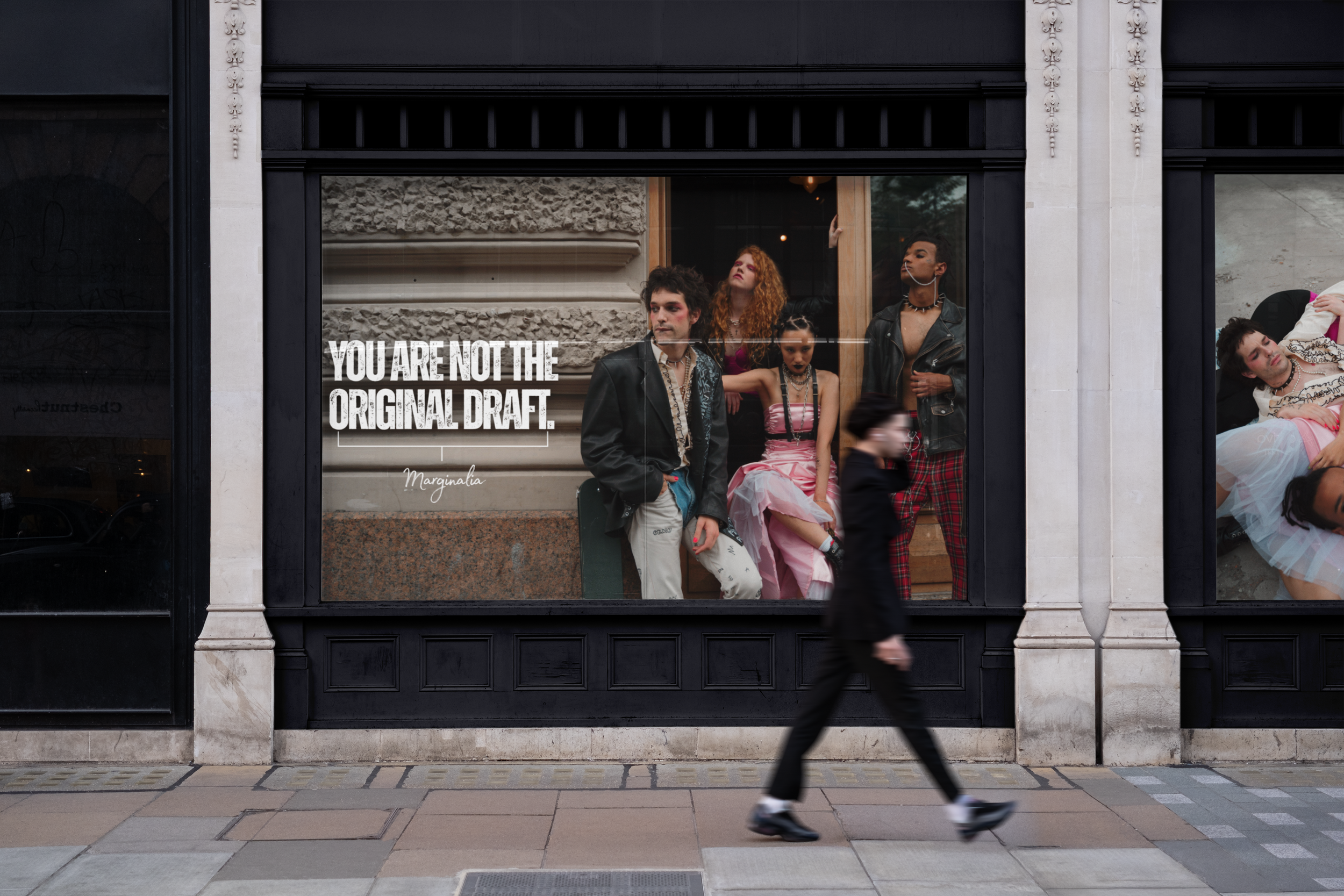
you are not the original draft.

01 website mockup

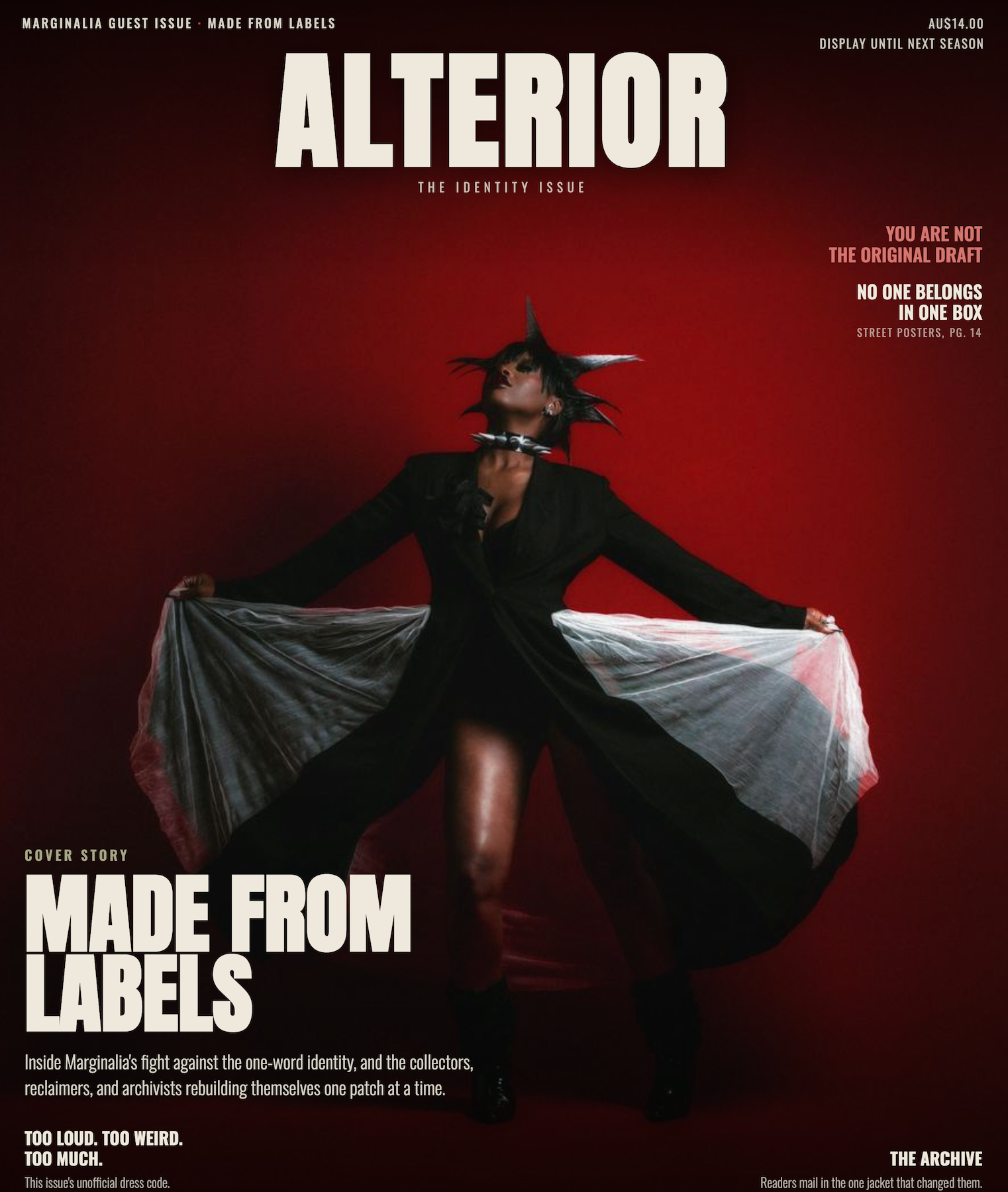
02 alterior cover

03 moodboard grid
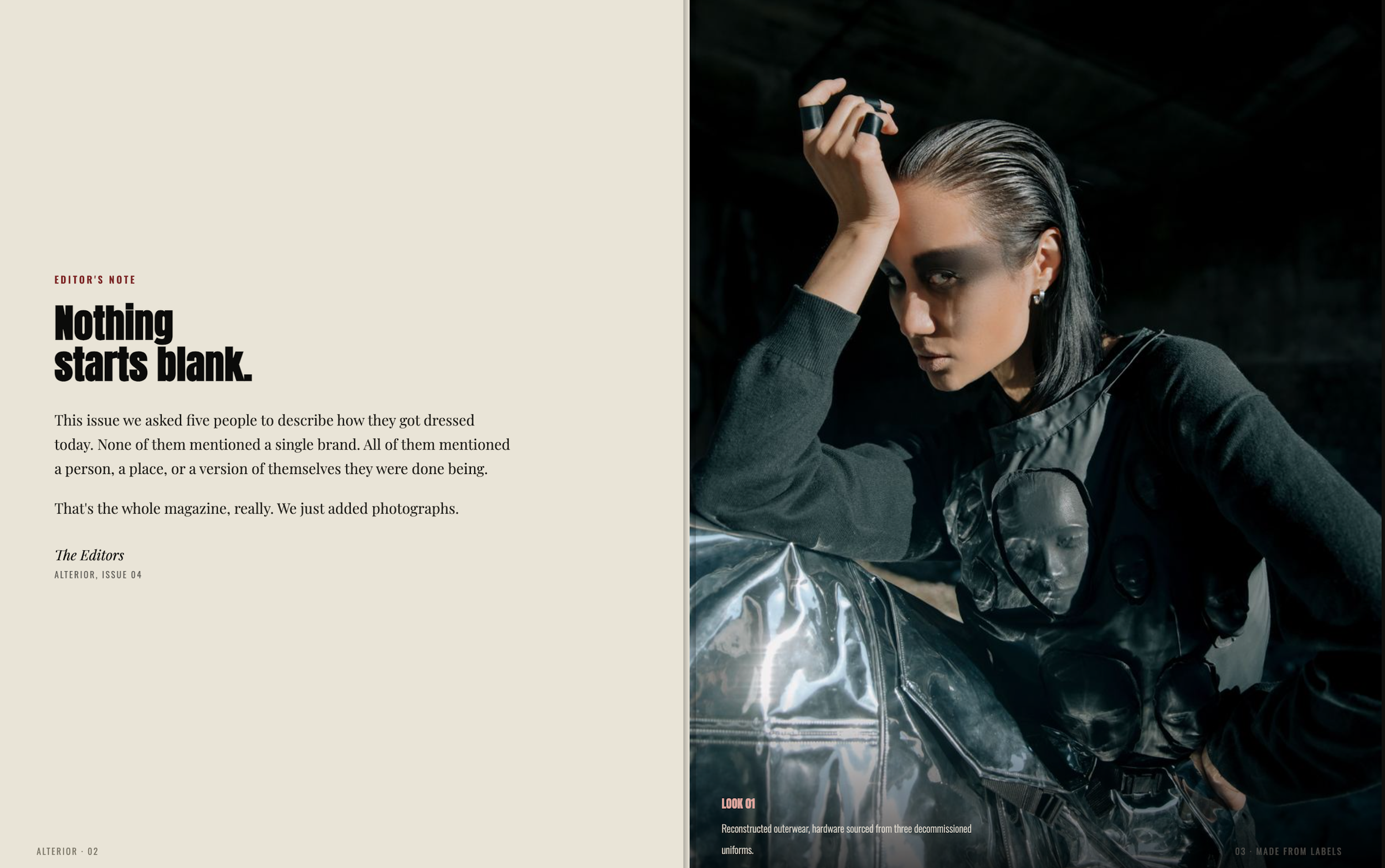
04 front page spread
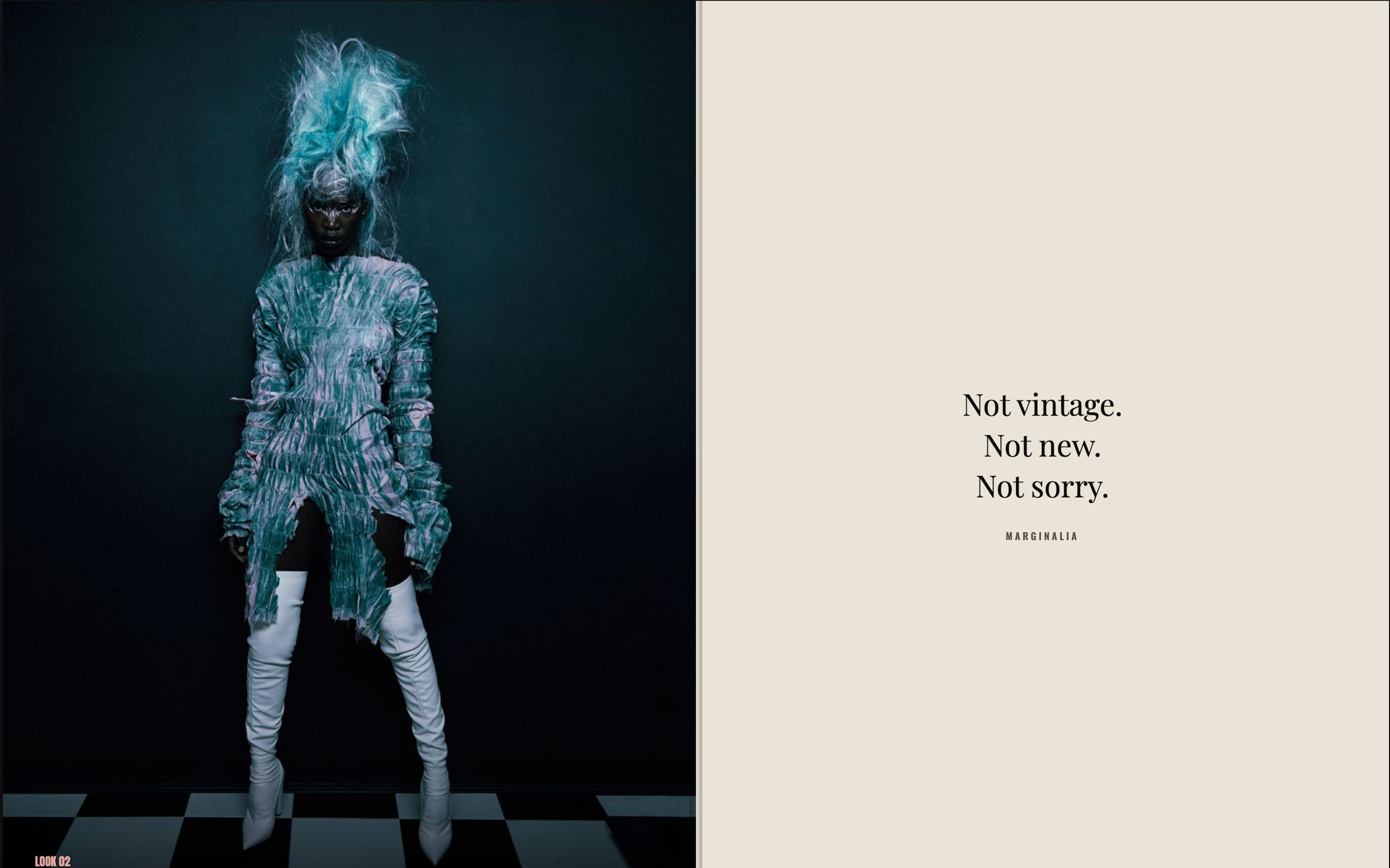
05 deadpan copy
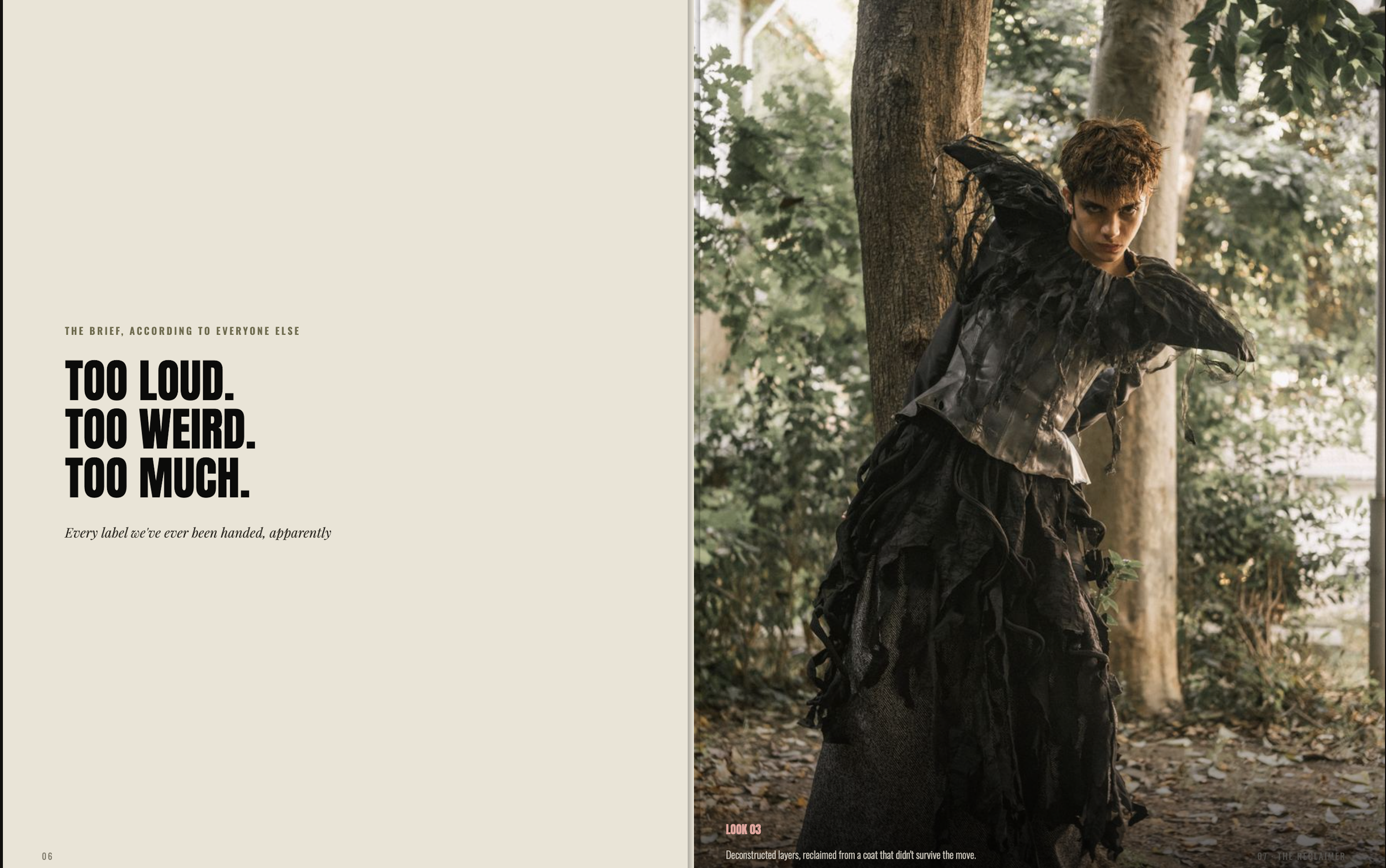
07 feature pull quote
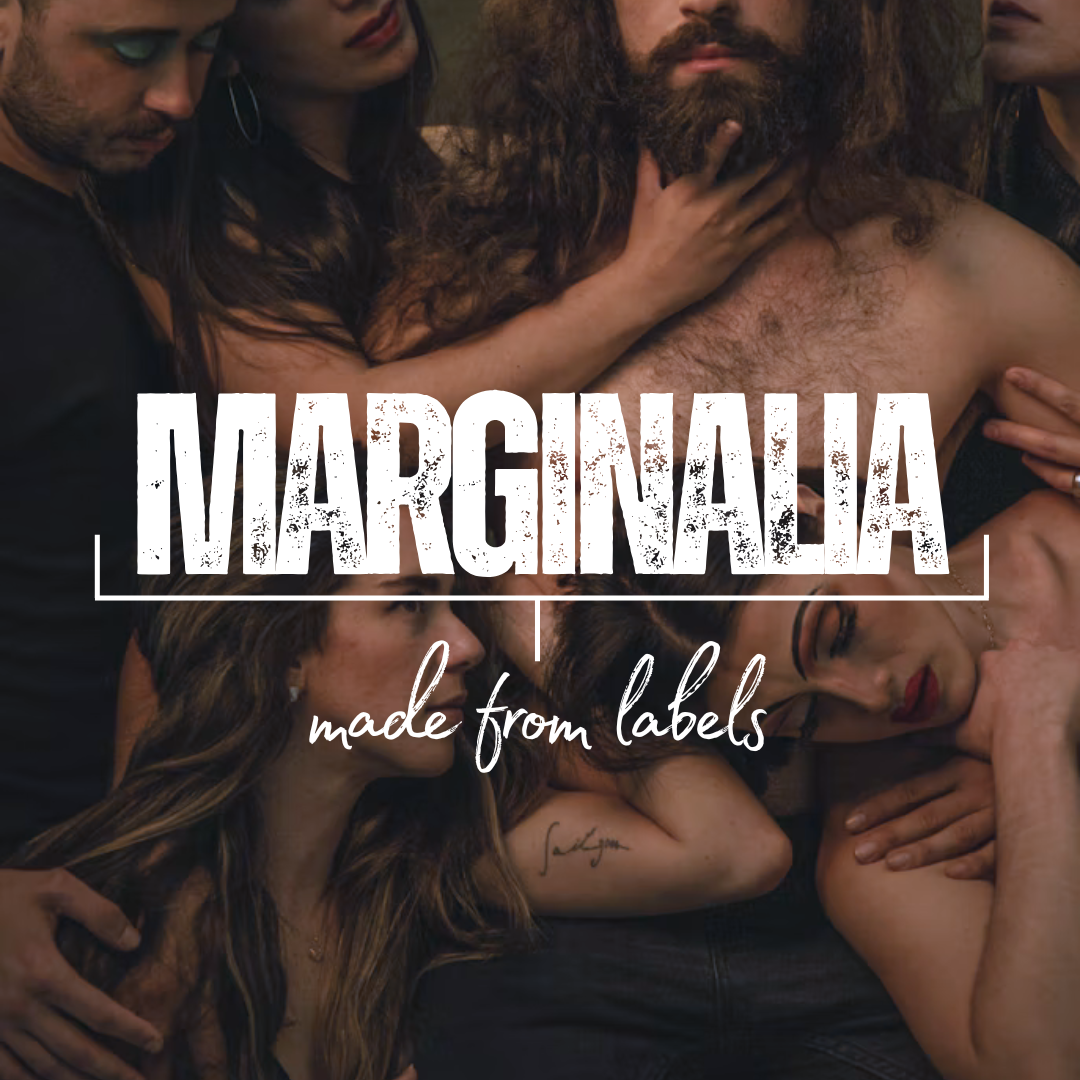
06 marginalia logo
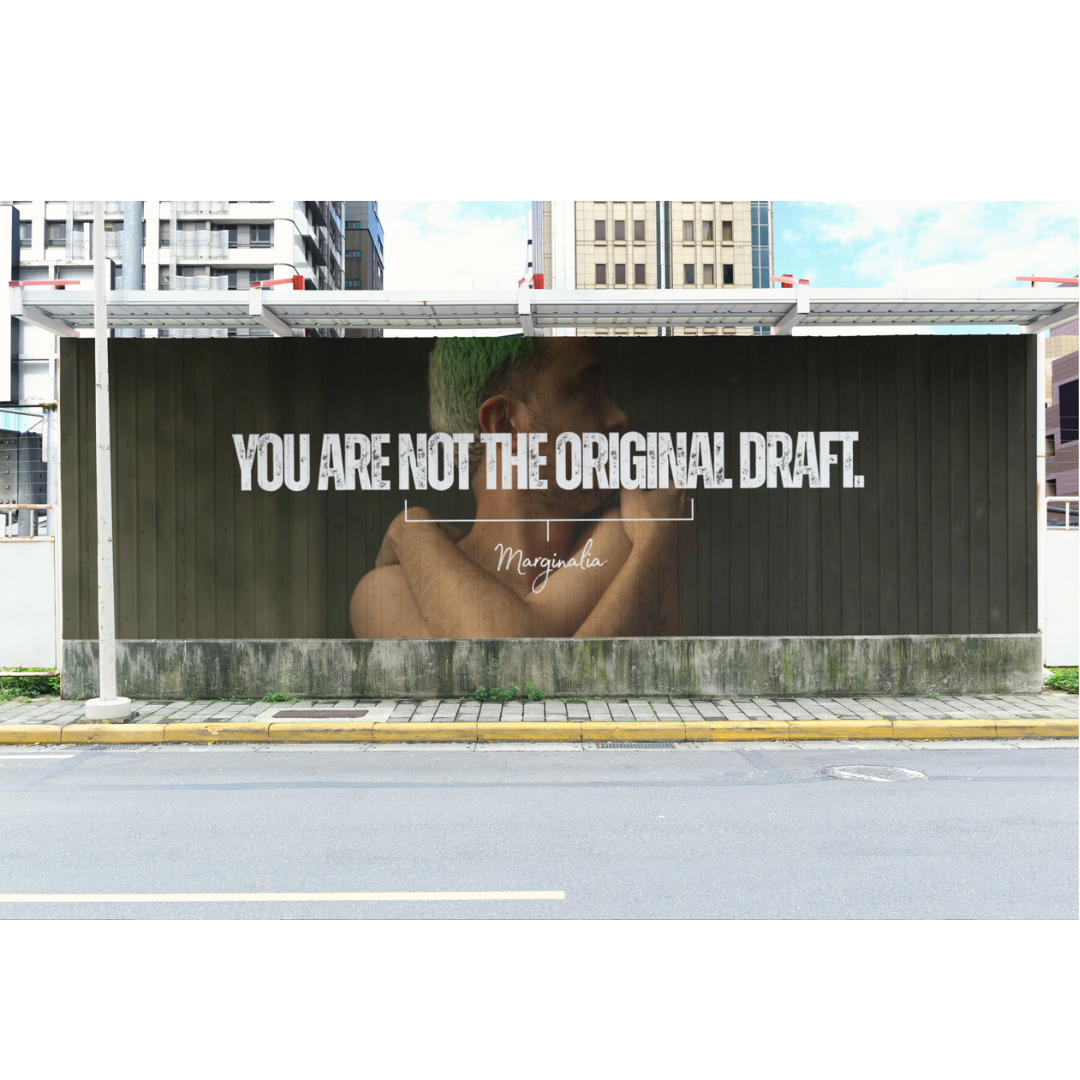
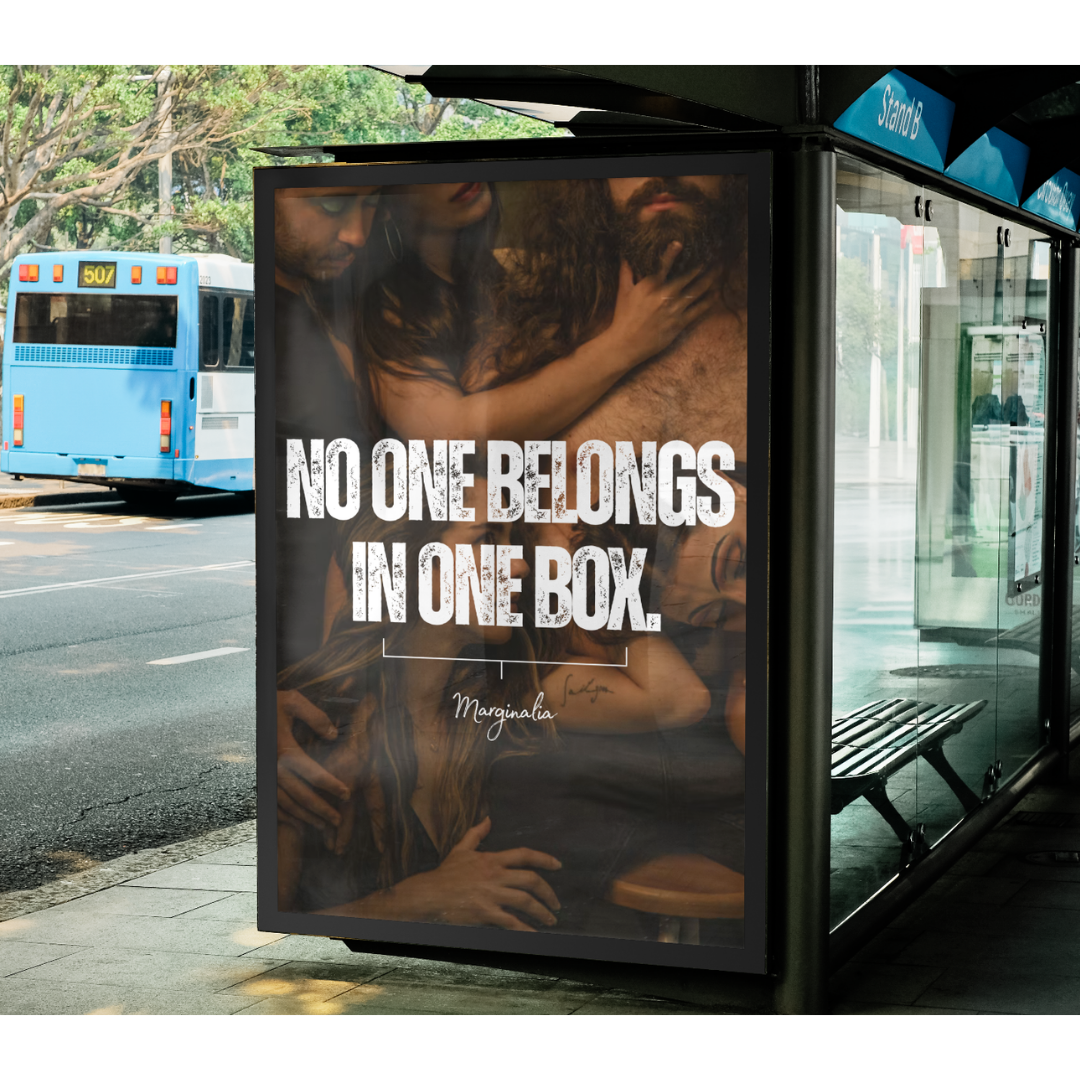
07 marginalia billboard

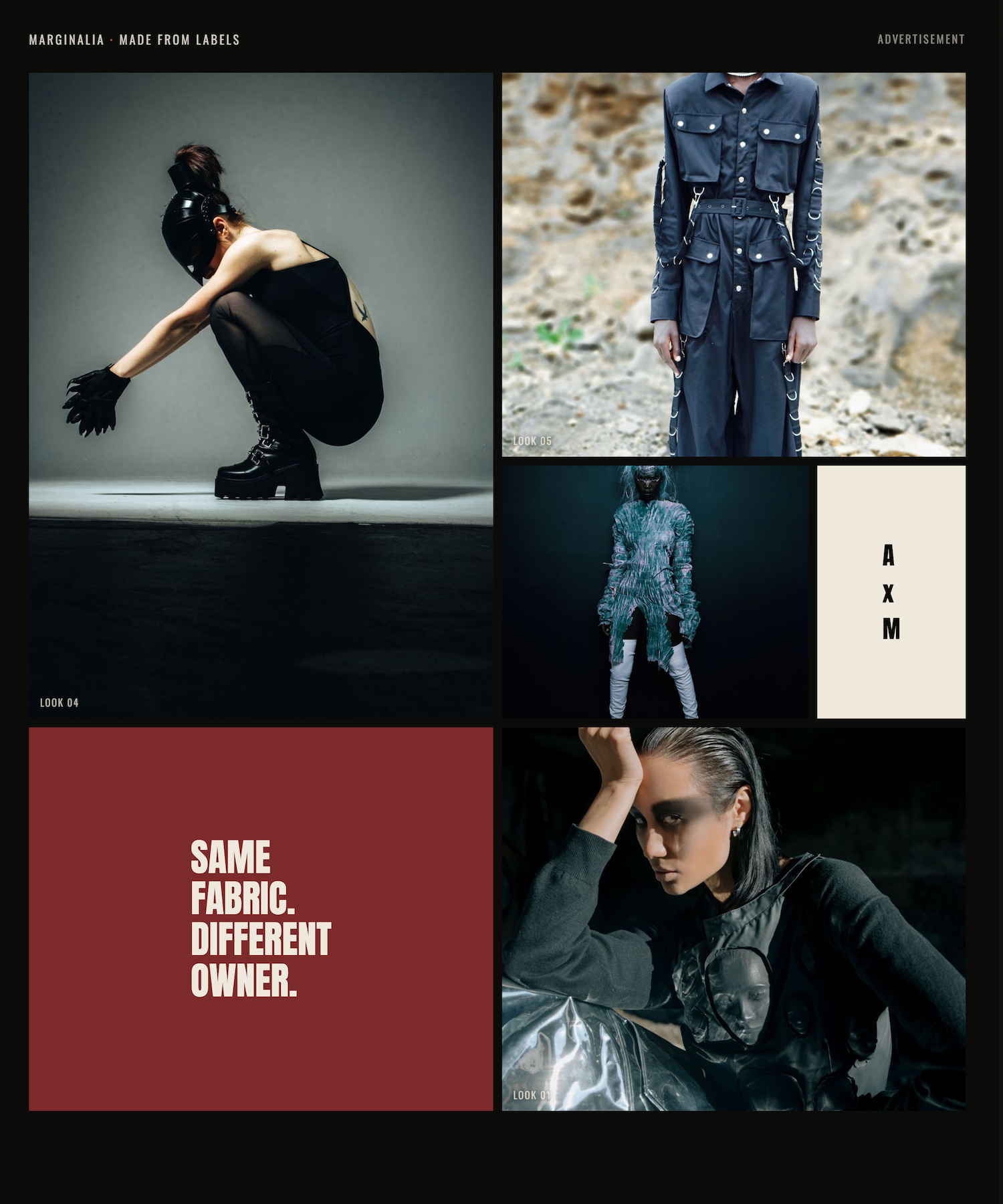
08 marginalia ad
campaign rationale & strategy

10 behind the pictures

01 — The Concept

Brand identity

Marginalia is an upcycled fashion label built for people who have collected identities rather than settled into one. Alterior is its high fashion counterpart: a made-to-order atelier line that argues the maximalism luxury fashion keeps borrowing from queer culture, ballroom, and immigrant tailoring traditions should be built by the people who invented it, not just quoted once it's already safe to.

Both houses share one origin story: the word “label,” and its two meanings. A clothing label tells you where a garment came from. A personal label tells you who someone else decided you were. Marginalia takes that second kind of label and turns it into raw material instead of a restriction. Alterior takes the same idea and stages it at couture volume.

Consumer profile

Marginalia's customer shows up in three recurring types, drawn from the brand's original audience research:

  • The Collector — wardrobe built from every interest they've picked up, never one aesthetic for long.

  • The Reclaimer — takes a label someone else handed them and cuts it into something of their own.

  • The Archivist — can tell you exactly where a piece came from. Meaning first, trend a distant second.

Alterior dresses the same person, in a different room: stylists, editors, and creatives who want couture-level construction without having their reference points sanded down to make the work palatable. The secondary audience is the people who usually style that room without ever being invited to sit in it.

Seasonal theme: “Turn the Label”

The launch season is framed as the moment Marginalia goes public with its atelier arm. The theme runs through every touchpoint: the site itself flips between the two houses on a literal woven label, and the campaign line is built the same way, everything has two sides, and the brand is done hiding the second one.

This theme is grounded in four shifts already underway in the audience, not invented for the campaign:

  • Identity experimentation — younger audiences increasingly treat identity as ongoing and collected, not fixed.

  • The return of upcycling — consumers want pieces that are both lower-impact and personal, not mass-produced.

  • Niche communities — most people now move between several overlapping scenes rather than committing to one.

  • The archive mentality — people already save and catalogue pieces of their own history, online and off. The brand just gives that instinct a storefront.

02 — Brand Strategy

Distribution

Direct-to-consumer only at launch, through the dual site. Marginalia carries a small wholesale run through independent and queer-owned boutiques, chosen for community fit over foot traffic. Alterior stays appointment and trunk-show only: one-of-one pieces, made to order, scarcity built in rather than manufactured after the fact.

PR & influencer seeding

Seeding goes to the people already living this brand's premise, not to reach alone:

  • Marginalia product goes first to thrifters and upcycling creators already documenting their own archive process, matching the Archivist customer instead of a generic fashion micro-influencer.

  • Alterior pieces go to queer nightlife performers and ballroom figures who already treat getting dressed as a language. Casting the collection on people outside that world would read as costume, not credibility.

  • Press is split into two angles run in parallel: a sustainability story for Marginalia's upcycling process, and an identity/culture story for Alterior's positioning, sent to the trade press covering each beat rather than one blended pitch.

Experiential activations

  • Archive Booth pop-up: people bring in a piece of clothing that mattered and record its story on the spot. The recordings become site content directly, so the activation is also the content pipeline.

  • Alterior's runway moment is staged inside a queer nightlife venue instead of a standard fashion week slot, putting the collection where its reference points actually live rather than importing them into a room that historically excluded them.

  • An oversized version of the site's label-flip mechanic is built as a physical installation at both events, giving the campaign one consistent visual signature across digital and in-person touchpoints.

Media partnerships

  • Co-produced runway moment with a queer nightlife collective or ballroom house, framed as a genuine credit rather than a one-off sponsorship.

  • Ongoing sourcing partnership with a secondhand/resale platform for Marginalia's reclaimed material, doing double duty as supply chain and co-marketing.

03 — Projected Success Metrics

Marginalia hasn't launched yet, so the numbers below are launch-season targets built from category benchmarks, not results from a live campaign. They're included here to show how success would be measured, and on what timeline.

Sell-through and engagement matter, but the number that actually tests the brand's thesis is Archive Booth submissions. If people bring in their own clothing to tell a story about it, the “identity built from labels” premise is working. If that number stays flat while sales hold up, the brand is selling clothes, not the idea behind them, and the strategy needs revisiting before the next season.

10.1 behind the pictures

writing marginalia

I went into this knowing exactly what I didn't want the copy to sound like. Every upcycled fashion brand I've seen talks the same way: "wear your truth," "authentically you," a mood board's worth of affirmations stapled to a product page. That tone always makes me suspicious of a brand before I've even looked at the clothes. So the first real decision on this project wasn't a line of copy at all, it was ruling out an entire register of fashion marketing before I let myself write a single sentence.

The brand platform gave me a way out of that trap almost by accident. Marginalia is built on the double meaning of the word "label," a clothing label tells you where something came from, a personal label tells you who other people decided you are. Once I had that, I stopped trying to write copy that sounded inspiring and started writing copy that just stated things plainly. "You are not the original draft." "No one belongs in one box." Those lines aren't trying to convince anyone of anything. They read more like something you'd overhear than something a brand paid to say, and that was the point.

Why I kept it dry

I've got a rule for myself with anything identity-related: if a line could be cross-stitched onto a cushion, cut it. That instinct came directly out of the psychology side of what I do. People who've spent years feeling like "too much" for one category don't need to be told they're valid, they've usually heard that line a hundred times already and it's stopped landing. What actually gets a reaction is copy that just describes the situation accurately and lets the reader do the recognizing themselves.

That's why the ad-page copy borrows so directly from Balenciaga's dry humor. "Not vintage. Not new. Not sorry." only works because it doesn't explain the joke. The moment a brand tries to clarify why something's funny, it stops being funny, and worse, it starts sounding like it's apologizing for the product. Marginalia can't afford to sound apologetic about clothes stitched from other people's discarded clothes. The whole concept only holds up if the brand sounds completely unbothered by it.

Writing for three different people, not one imagined customer

The Collector, Reclaimer, and Archivist personas from the original brand doc ended up doing more work for the copy than I expected going in. I didn't want one blended "brand voice" trying to speak to all three at once, because that's how you end up with copy so general it means nothing to anyone.

So the Collector gets language about accumulation, never resolution, nothing about "finally finding yourself." The Reclaimer gets the sharpest lines, since that's someone actively turning something used against them into their own material. The Archivist gets the most concrete, specific detail, actual materials, actual construction notes, because that reader cares about where a piece came from more than how it makes them feel.

What I was actually trying to do

Underneath all of it, I was trying to avoid the one word this entire category leans on: authentic. It's said so often in fashion copy that it's become meaningless, a placeholder for "trust us." Instead of telling anyone they're authentic, I tried to just describe things specifically enough that the reader could tell for themselves. Real stitching. Real materials. Real people who've never fit one category cleanly. If the copy's doing its job, nobody reading it needs to be told what to feel about it.

Previous
Previous

Umeed Psychology

Next
Next

PROVENANCE