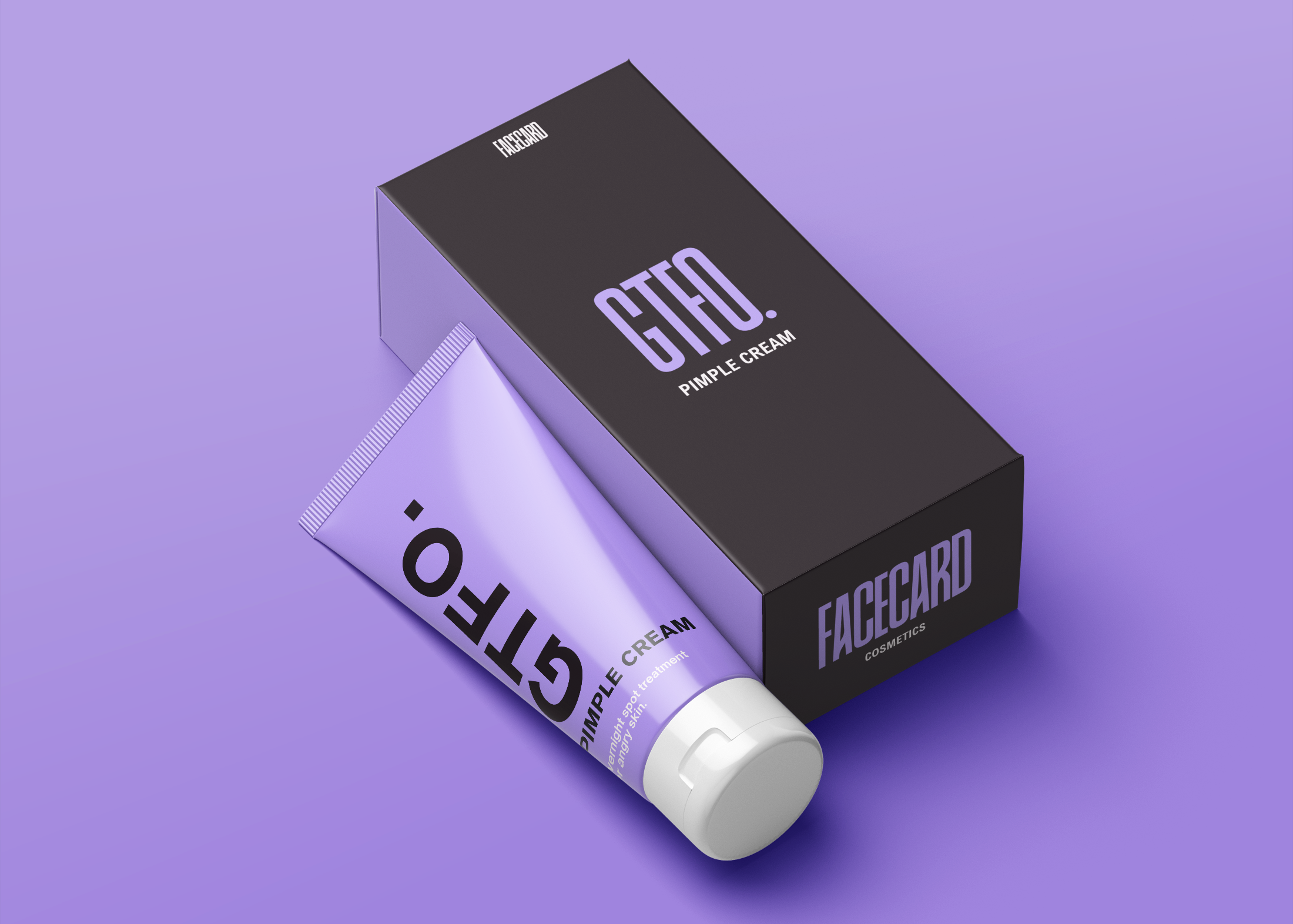
FACECARD
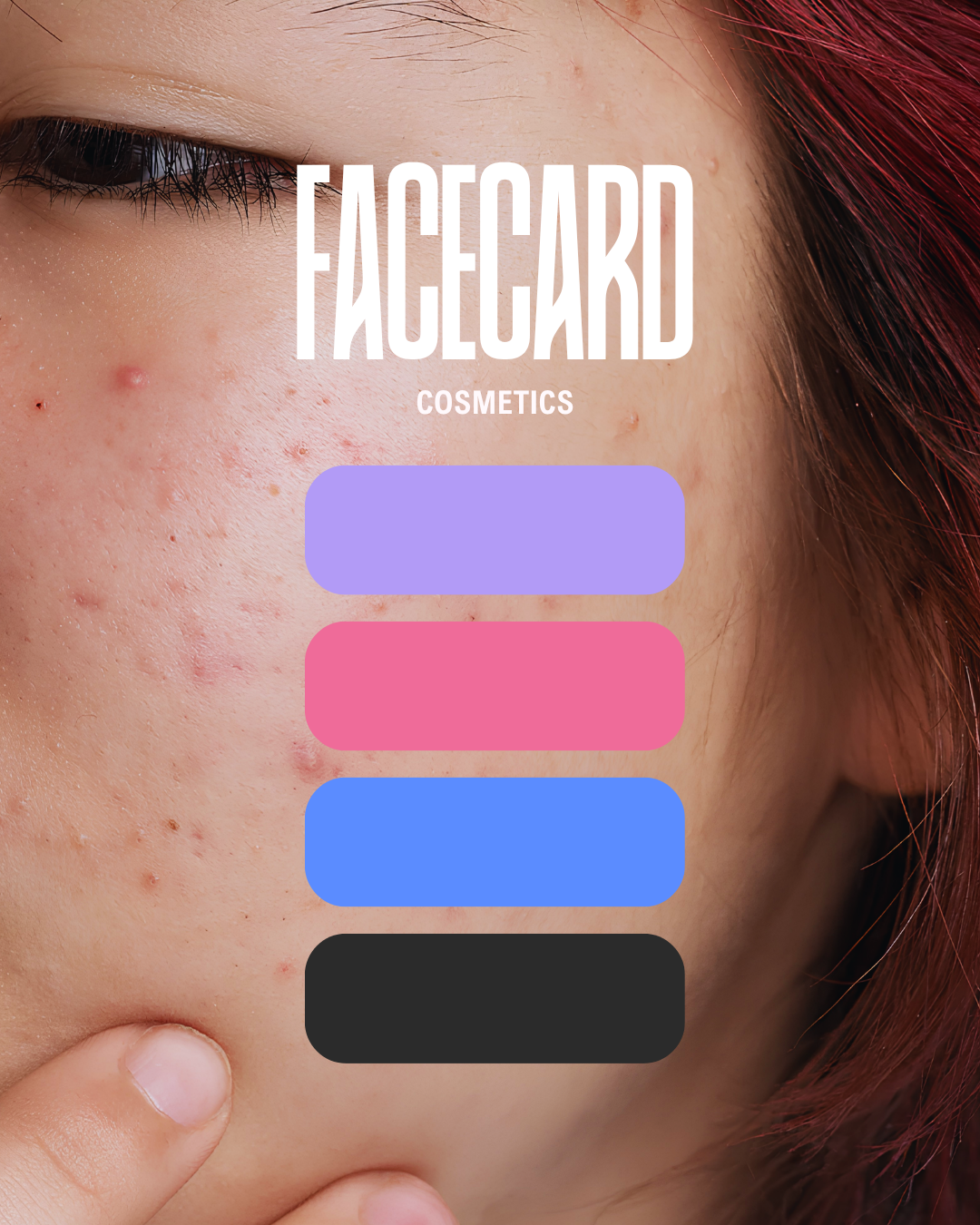
A conceptual skincare brand created in response to growing consumer distrust of AI-generated content and perfection-focused beauty marketing. Built around the platform Made For Real Skin, the project combines trend forecasting, consumer insights, brand strategy, and visual identity design to explore how beauty brands can build trust through authenticity.
Made For Real Skin
brand positioning
Facecard exists because most beauty marketing still sells a face that doesn't exist. As AI-generated content and heavy editing made "flawless" feel manufactured, the audience stopped looking for perfection and started looking for proof. The brand's job is to make honesty the actual product, not a tone laid over the same old promises.
Unapologetic
Honest
Self-aware
Blunt
The Skeptic
Questions traditional beauty marketing on sight and watches ingredient breakdowns before the ad itself.
The Realist
Wants something that works before a 9am meeting, not a twelve-step ritual to maintain.
The Self-Expressor
Treats skincare as identity and creativity, not a means to erase texture.
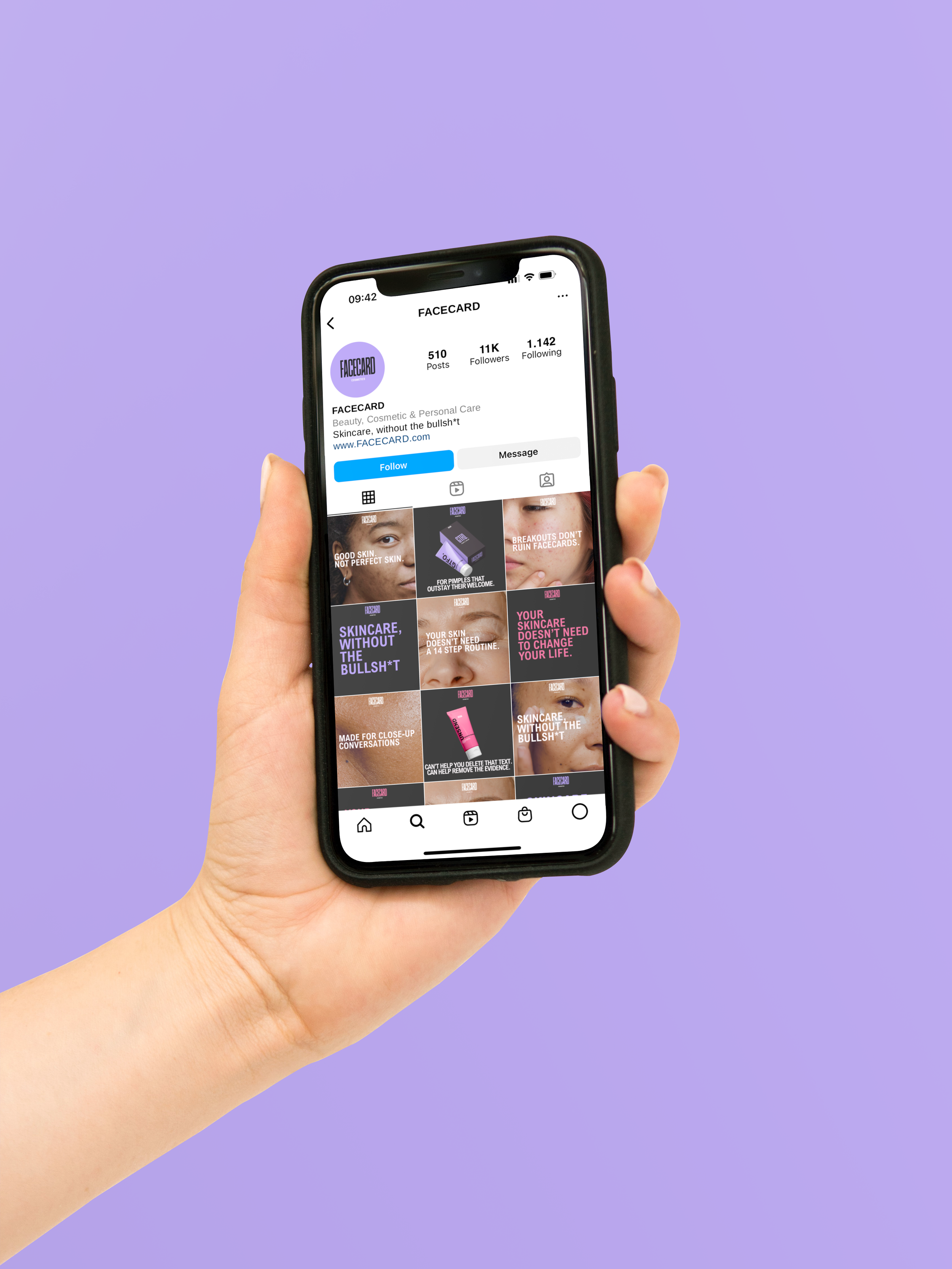
Instagram feed mockup
content strategy
A full grid pass to test whether the brand voice holds up across nine consecutive posts, not just in a single hero image.
Instagram Posting Plan
content strategy
Social Proof & Influencer Marketing
PR & Influencer Strategy
Two working mockups built off the Facecard brief: a creator seeding email that treats the outreach itself as brand voice, and a campaign grid showing three creators posting across three audience personas with no shared script.
Social Proof & Influencer Marketing
Creator Content Brief
Reasoning Behind The Visuals
Strategic Thinking
Where it started: the anti-AI aesthetic
Beauty marketing spent years getting more polished. Retouched models, studio lighting, campaigns controlled down to the last detail. People knew it wasn't entirely real, and they accepted that, because it was aspirational and the trade felt worth it.
That trade is breaking down. As AI-generated content spreads, people are getting fluent in what manufactured looks like, filters, heavy editing, and now AI itself. The uncomfortable part is that AI hasn't made people trust digital content more. It's done the opposite. Once someone knows a model, a product photo, and a glowing testimonial can all be generated in under a minute, perfection stops reading as professional and starts reading as suspicious.
What's actually happening isn't a rejection of AI. It's a rejection of anything that feels artificial, which is why real texture, half-empty product bottles, behind-the-scenes footage, and unfiltered reviews are showing up more across beauty marketing. People aren't responding to that content because it's messy. They're responding because it's believable. Getty's research on this backs it up: most people can tell an AI image looks realistic and still won't call it real, because they're paying attention to how something was made, not just what it looks like.
Facecard is built directly on top of that shift. If polish used to be the differentiator, humanity is the differentiator now, and the brand only works if it treats that as a structural decision, not a vibe.
Why the positioning sits between competitors, not against one
Bubble, Krem, and Ardene each do a piece of what Facecard is going for: Bubble's community energy, Krem's ingredient transparency, Ardene's youth culture fluency. It would have been faster to pick one as the direct competitor and position Facecard against it. But none of them are actually the problem Facecard exists to solve. The problem is the broader beauty marketing habit of performing relatability while still polishing it. So the positioning had to describe a gap between three brands instead of a fight with one, which is a harder thing to write clearly but the more honest read of where Facecard actually sits.
Why the copy reads the way it does
If the brand's whole argument is that manufactured content feels suspicious now, the copy can't just claim honesty, it has to survive being read closely by someone who's already skeptical of brand language. That's the actual reason behind decisions like:
The PR seeding email reading like a real inbox message before it reads like brand copy, subject line included
The creator brief opening with "you know your audience better than we do" instead of a list of demands
Deliverables framed as a typical mix rather than a mandate, since a rigid script would quietly contradict a brand claiming it doesn't need one
None of that is a stylistic choice. It's the same logic from the blog applied to outreach instead of content: the moment the copy feels performed, the whole positioning collapses, because performed honesty is just polish with different words.
Why the before-and-after got rewritten
The standard advice says before-and-afters convert better than almost anything else in skincare. That's true for most brands. It's the wrong move here specifically, because a glow-up narrative only works if the audience is meant to see their current skin as a problem, and that's the exact belief Facecard is arguing against. So the asset became a same-day, same-face pairing instead, a spot calmer twelve hours after GTFO, everything else on the face left alone. The proof is that one specific thing worked, not that the whole face needed saving.
Why the content cadence isn't skewed toward selling
It would be easy to load the week with product pushes, but a brand claiming it doesn't need to perform perfection loses that claim fast if every post is secretly a pitch. That's why the pillars split close to even (education, social proof, brand voice, community folded in weekly) instead of leaning hard into conversion content. Trust has to get rebuilt continuously here, not just established once at launch.
None of this was about following the marketing framework less. It was about checking, at every step, whether the framework's default move actually matched what Facecard claims to believe, and rewriting the parts that didn't.